Therapeutic touch — the deliberate use of physical contact to support health and wellbeing — is not a wellness trend. It is a biological mechanism, deeply embedded in the architecture of the human brain. When skin meets skin, a cascade of neurological events unfolds: stress hormones drop, reward circuits activate, and the nervous system shifts from threat to safety. Published by the Brain Research Foundation (BRF), the nation’s oldest neuroscience foundation, this article explores the science behind why human connection through touch is one of the most powerful and underutilised medicines available to us.
What the Research Shows
- Physical touch activates the release of oxytocin, directly suppressing cortisol and lowering blood pressure within minutes of contact.
- Specialised C-tactile afferent nerve fibres in the skin fire specifically in response to gentle, social touch — signalling safety to the brain’s amygdala. BRF’s Lunch & Learn on Social Touch explores this mechanism in depth.
- Touch deprivation is associated with elevated inflammatory markers, increased anxiety, and accelerated cognitive decline in older adults — see BRF’s research into dementia and cognitive decline.
- Therapeutic touch — including massage and somatic therapy — has measurable effects on immune function, mood regulation, and nervous system recovery.
- Even non-intimate touch from a healthcare professional produces documented physiological benefits, independent of emotional closeness.
How Does Physical Touch Reduce Stress in the Brain?
The answer begins not in the mind, but in the skin. The human body is equipped with a dedicated neural pathway for processing social touch: C-tactile afferent fibres (CT fibres), a class of unmyelinated sensory nerves found across the skin that respond specifically to gentle, stroking contact. When these fibres are activated, they send signals directly to the insular cortex — a region of the brain involved in emotion, empathy, and interoception — effectively telling the brain: you are safe, you are not alone.
This signal has downstream effects throughout the body. The hypothalamus responds by triggering the release of oxytocin from the pituitary gland. Oxytocin operates as a powerful physiological brake on the stress system — it suppresses cortisol, the body’s primary stress hormone, and reduces the amygdala’s reactivity, the brain’s threat-detection centre. The result is a measurable reduction in heart rate, blood pressure, and the subjective experience of anxiety. BRF’s article on navigating mental health recovery explains how these same mechanisms underpin the brain’s capacity for resilience.
This is why a hand on a shoulder during a difficult conversation, or a hug at the right moment, can feel so immediately regulating. It is not a placebo. It is neuroscience.
What Is Therapeutic Touch and How Does It Work?
Therapeutic touch refers to any intentional, structured use of physical contact to promote healing — from clinical massage therapy and somatic bodywork, to skin-to-skin contact in neonatal care, to the deliberate physical presence of a trained caregiver. Despite the variety of forms it takes, the underlying neuroscience is consistent.
The primary mechanism is nervous system regulation. In a healthy stress response, the sympathetic nervous system (fight-or-flight) activates in response to threat, and the parasympathetic nervous system (rest-and-digest) restores equilibrium once the threat passes. In many people experiencing chronic stress, anxiety, depression, or trauma, this system becomes dysregulated — the body remains in a state of low-grade threat activation even in the absence of any actual danger.
Therapeutic touch intervenes directly in this cycle. Gentle, sustained contact stimulates the vagus nerve — the primary pathway of the parasympathetic nervous system — shifting the body’s autonomic state toward calm. Research into somatic healing approaches has shown that this bottom-up regulation can reach parts of the stress response that cognitive therapies alone struggle to access. For more on how the brain heals and adapts, see BRF’s overview of mental health recovery and neuroplasticity.
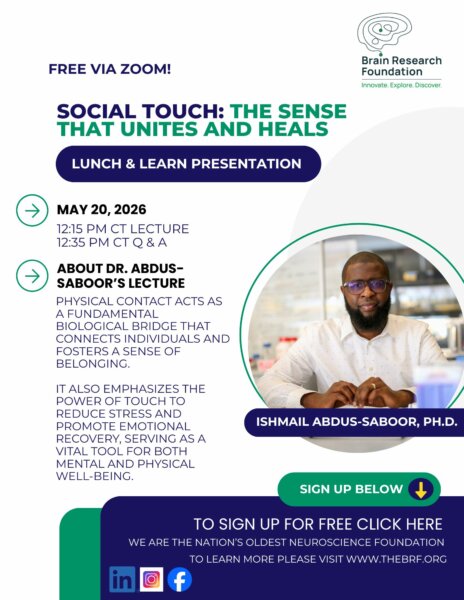
“Social touch is one of our most powerful and often overlooked senses — a fundamental biological bridge connecting individuals and fostering a deep sense of belonging. Physical contact lowers stress hormones, calms the nervous system, and plays a vital role in emotional recovery and long-term brain health.”
— Dr Ishmail Abdus-Saboor, PhD, Neuroscientist, BRF Lunch & Learn: Social Touch: The Sense That Unites and Heals
What Happens to Mental Health When People Are Deprived of Physical Touch?
Touch deprivation — colloquially called “skin hunger” — is a condition that received significant scientific attention during the COVID-19 pandemic, when prolonged isolation forced millions of people to live without regular physical contact. BRF’s 2021 expert panel on pandemic mental health examined the neurological toll of this mass disconnection in detail.
Without the regular input of CT fibre stimulation and oxytocin release that social touch provides, the body’s stress system has no counterweight. Cortisol levels rise. Inflammatory cytokines — proteins associated with immune activation — increase. BRF’s research into how the brain’s immune cells shape health across the lifespan provides important context for understanding how inflammation and brain health interact. Sleep quality also deteriorates — partly because oxytocin helps regulate the sleep cycle, a mechanism further explored in BRF’s research on sleep and brain health. And in the absence of touch-driven nervous system regulation, anxiety and depressive symptoms intensify.
For older adults, the consequences of touch deprivation are particularly acute. Social isolation and reduced physical contact are associated with accelerated cognitive decline, increased risk of dementia, and greater vulnerability to depression. BRF’s guide to understanding dementia and their research into depression in individuals with dementia highlight why social connection — including physical touch — is a critical protective factor in ageing brain health.
How Does Touch Create a Sense of Belonging?
Belonging is not merely an emotional experience — it is a neurological state. And physical touch is one of the most direct routes to achieving it.
When we make physical contact with another person, oxytocin is released in both parties. This shared neurochemical response strengthens trust, increases prosocial behaviour, and reinforces group affiliation. In evolutionary terms, physical touch was a primary signal of alliance — a way of communicating “you are part of my group, and I will protect you.” The brain’s reward system, including the nucleus accumbens and the ventral tegmental area, responds to social touch by releasing dopamine, creating the positive reinforcement that makes human connection feel intrinsically rewarding.
This is why the absence of touch feels so isolating at a neurological level. Social bonding is not just about emotional warmth — it is about the biological signals that tell the brain it is embedded in a network of care. When those signals are absent, the brain interprets the environment as more dangerous, and loneliness registers not just as a feeling, but as a state of physiological threat.
BRF’s ongoing research into mental health recovery highlights this mechanism directly: positive social engagement releases oxytocin and reduces inflammation, creating a measurable biological buffer that supports resilience and reduces the likelihood of relapse in mood disorders.
Is Therapeutic Touch Effective for Emotional Recovery?
The evidence is substantial. A growing body of clinical research demonstrates that therapeutic touch — in its various forms — produces measurable improvements across the key biological markers of emotional distress.
Massage therapy, one of the most widely studied forms of therapeutic touch, has been shown to reduce cortisol by an average of 31% and increase serotonin and dopamine levels — the neurotransmitters most commonly targeted by antidepressant medications. For a full overview of how these neurotransmitters relate to mood disorders, see BRF’s guide to everything you need to know about depression. In clinical populations, structured somatic therapies have shown efficacy as adjuncts to psychotherapy in the treatment of PTSD, anxiety disorders, and depression.
Skin-to-skin contact in neonatal intensive care — the practice of placing premature infants against a parent’s skin — has dramatic effects on neurological development, stress regulation, weight gain, and long-term emotional security. This is one of the most well-evidenced examples of touch as literal medicine: the body using physical contact to complete developmental processes that could not occur otherwise.
For adults, the mechanisms are the same even if the context differs. Somatic healing approaches — which work with the body’s physical sensations and nervous system responses — offer routes to emotional recovery that are particularly valuable for individuals who have experienced trauma stored somatically, and who may struggle to access recovery through purely cognitive approaches.
Can Touch from a Healthcare Professional Have the Same Benefits as from a Loved One?
This is one of the most common questions in the study of therapeutic touch — and the answer, supported by research, is yes, with important nuance.
What matters most are three factors: the context of the touch (is it understood as caring and intentional?), the recipient’s consent (is it welcome?), and the quality of the contact itself (is it gentle, sustained, and attuned?). When these conditions are met, clinical touch — from a massage therapist, nurse, physiotherapist, or other healthcare provider — produces many of the same physiological responses as touch from a close relationship.
Studies of therapeutic massage in clinical settings have documented reductions in cortisol, improvements in mood, enhanced immune function, and reduced pain perception in patients receiving professional touch with no prior personal relationship with the practitioner. The CT fibre system does not discriminate by relationship status — it responds to the quality and intention of the contact.
This has significant implications for healthcare. The increasing depersonalisation of medicine — shorter appointments, more digital interfaces, less hands-on examination — may be quietly eroding one of the most effective therapeutic tools available to clinicians. The Brain Research Foundation continues to fund innovative neuroscience research that deepens our understanding of these human connections and their impact on brain health.
Frequently Asked Questions
How does physical touch reduce stress in the brain?
Physical touch activates the release of oxytocin, which suppresses cortisol, the body’s primary stress hormone. When skin-to-skin contact stimulates specialised C-tactile afferent nerve fibres, the brain’s threat-detection system (the amygdala) receives a safety signal, calming the stress response and lowering heart rate and blood pressure. Learn more about how the brain manages stress and resilience.
Can touch from a stranger or healthcare professional have the same benefits as touch from a loved one?
Research suggests that even non-intimate therapeutic touch — from a massage therapist, nurse, or doctor — can produce measurable physiological benefits, including cortisol reduction and immune system support. The context, consent, and intention of the touch all influence the magnitude of the effect, but the neurological benefits are not exclusive to close relationships.
What happens to mental health when people are deprived of physical touch?
Touch deprivation — also called “skin hunger” — is associated with increased anxiety, depression, and a heightened stress response. Studies of social isolation, including observations made during the COVID-19 pandemic as discussed in BRF’s 2021 mental health panel, showed that the absence of physical contact elevates inflammation markers, disrupts sleep, and accelerates cognitive decline in older adults.
How does touch create a sense of belonging?
Touch communicates social bonds at a neurological level. Physical contact releases oxytocin, which strengthens trust and reinforces group affiliation. Research in social neuroscience — including BRF’s upcoming Lunch & Learn on Social Touch — shows that tactile stimulation activates the brain’s reward circuits, the same pathways involved in feelings of safety, acceptance, and belonging.
Is the therapeutic touch effective for emotional recovery?
Yes. Therapeutic touch — including massage, somatic therapies, and structured skin-to-skin contact — has been shown to reduce symptoms of anxiety and depression, lower cortisol levels, improve immune function, and support nervous system regulation. It is increasingly incorporated into integrative mental health treatment as a complement to psychotherapy and medication. BRF’s research into mental health recovery explores the neuroscience underpinning these outcomes.